Leadership
The souls behind Israel at Heart
Mutasim Ali and Monim Haroon fled the genocide in Darfur as children. In Israel, the family behind Israel at Heart helped a generation of African refugees reach university. Two of the African Students Organization's leaders tell that story, in their own words.
By Mutasim Ali and Monim Haroon
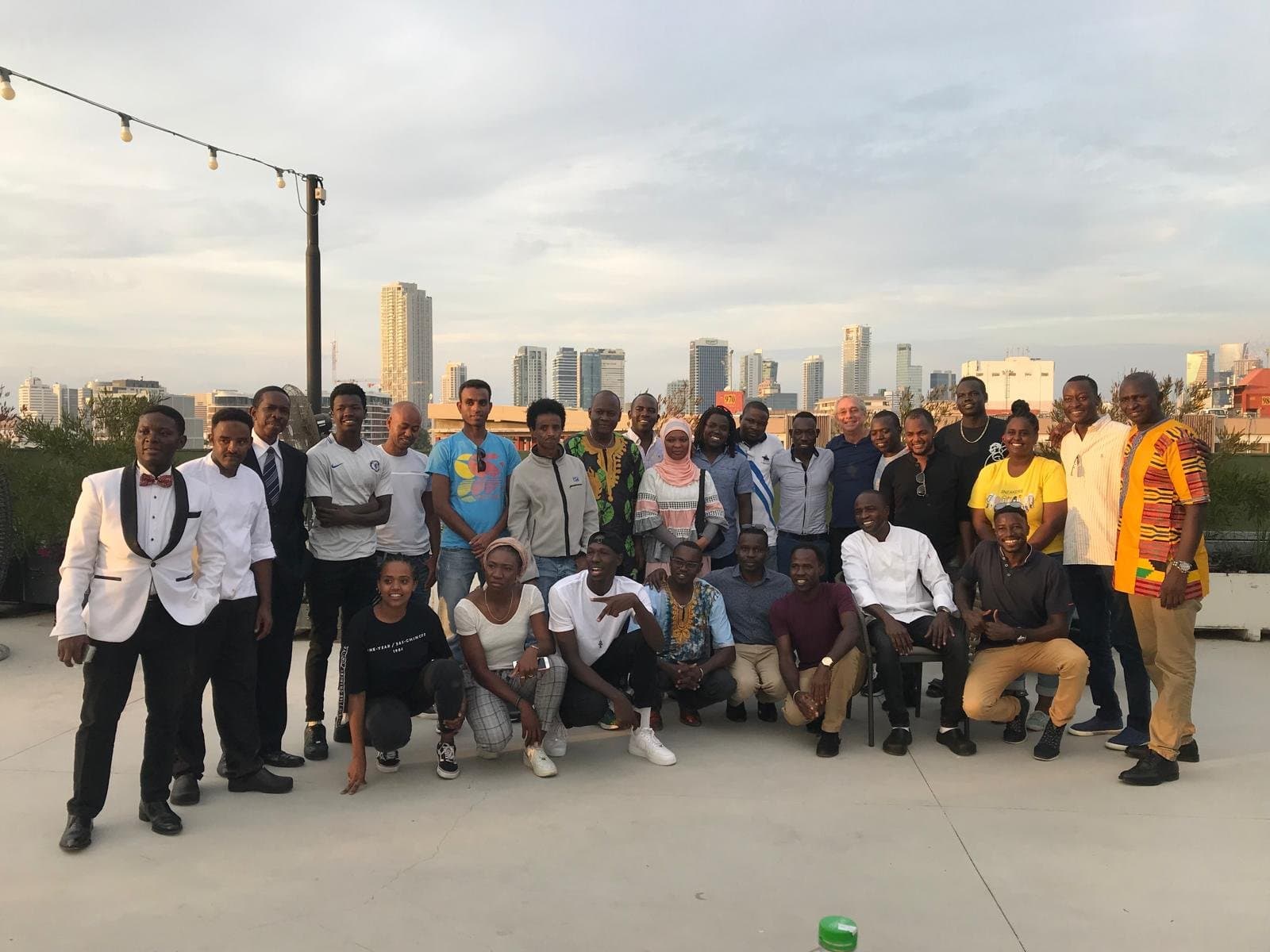
On Yom Kippur in 2018, a congregation of thousands at Central Synagogue in Manhattan opened its doors to a group of Muslim refugees from Darfur and asked us to come to the front and share our experiences, the families we had to leave behind.
We were those strangers. We were not wronged. We were loved.
Rabbi Angela Buchdahl looked out at us and said to her congregation: “This is not usually the face of Israel we see.”
We come from a world where a person of another faith does not walk into the mosque on a holy day. Not on the holiest one. And there we stood, on the holiest day of the Jewish year, in a sanctuary that had every reason to keep the morning for itself, being handed a prayer to say out loud.
Twenty years before that morning, we were children running from a genocide in Darfur. A decade before it, we were asylum seekers walking out of detention facilities in the Negev with our documents in a plastic bag and not much else.
Today, one of us works as legal counsel at the Raoul Wallenberg Centre for Human Rights, on genocide prevention and accountability for victims in several countries. The other led the Advocacy and Partnerships Department at HIAS Israel until recently, has represented refugee issues at the Knesset, and helped direct an emergency response that reached hundreds of thousands of Israelis after October 7.
Between the first pair of sentences and the second lies a story. At nearly every turn of it stands the same family.
Nobody crosses the distance from a massacre to a graduation ceremony alone. Many people carried us and carried our community: teachers, volunteers, employers, strangers who stopped being strangers. We hold every one of them, and nothing here is taken from them. But we want to put on record what one family did, because their name keeps appearing in the margins of our lives, and they have never once put it there themselves. Joey Low and his family. The founders and the souls behind Israel at Heart.
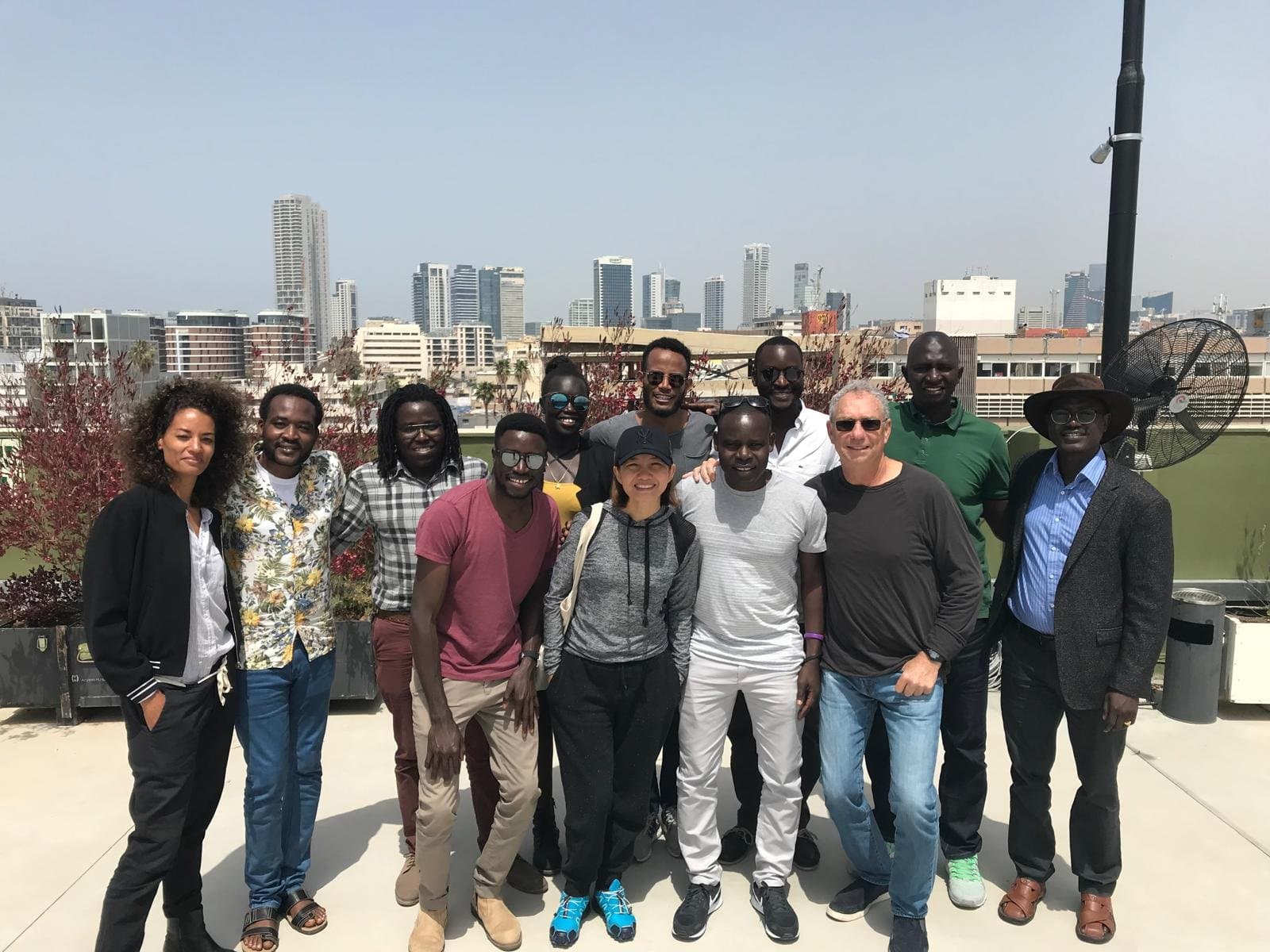
Learning Hebrew
Before any of us could study anything, we had to learn Hebrew.
One of us still remembers how it started. The teacher told the class about Eliezer Ben-Yehuda, who dragged Hebrew back out of despair and made his own sons speak it, a language nobody had used at a dinner table for centuries.
We sat there hearing our own story told backward.
Our mother tongue is Fur. Under Arabization and the imposition of Islam in Sudan, Fur was forbidden in the schools and, in some places, in the village. Teachers punished us for speaking it. One language was being brought back to life by sheer stubbornness. Ours was being taken out of our mouths.
We speak Hebrew now more than we speak our own language. We haven’t finished deciding how we feel about that.
Where it comes from
Joey was born in New York to Jewish refugees who got out of Europe ahead of the Nazis. Flight and refuge were not history lessons in that house. They were the family’s own memory, told at the table.
He grew up captaining his high school basketball team and playing pickup in Central Park with Black teammates, in an America still arguing about whether his friends were allowed to sit where he sat. He carried David Ben-Gurion and Dr. Martin Luther King Jr. in the same heart and never once felt a contradiction between them.
At sixteen he came to Israel and fell in love. He spent a university year at the Hebrew University of Jerusalem. In 1973, when war broke out on the holiest day of the Jewish year, he volunteered and went. Love of the Jewish state and love of human dignity grew up in him side by side, and everything that follows comes from that.
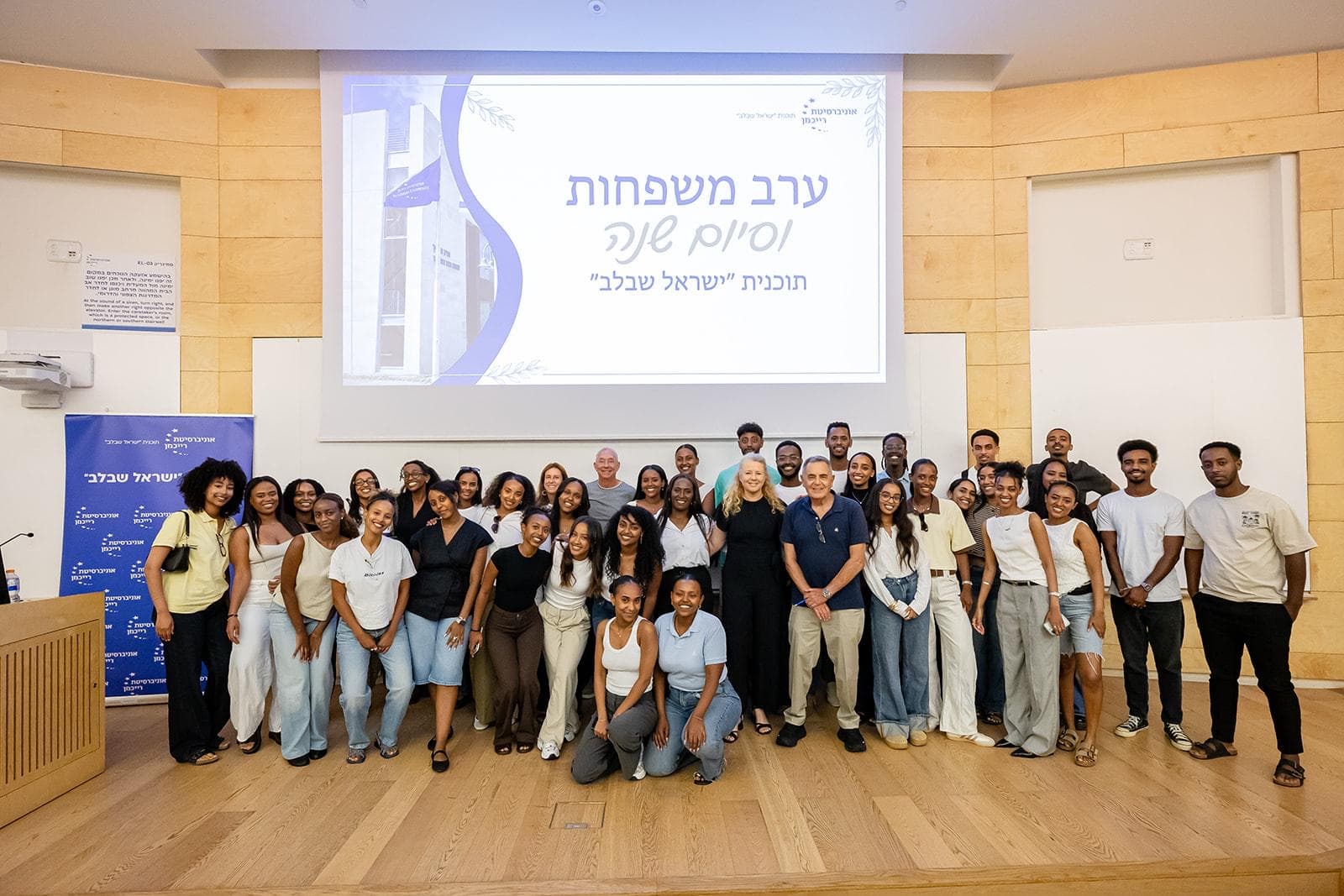
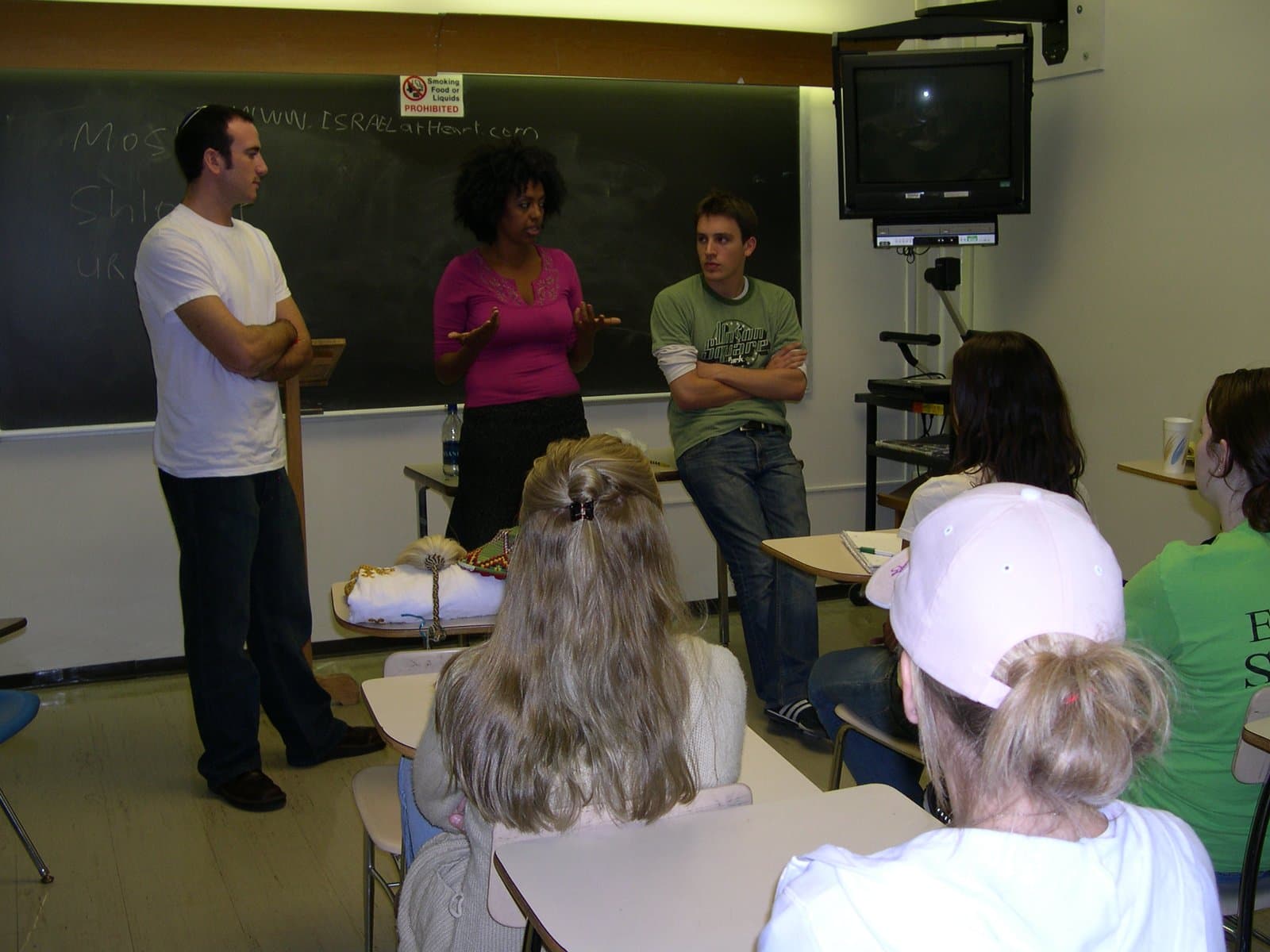
In 2002, he founded Israel at Heart on a simple bet: that Israel’s best answer to a hostile world is its own people, met face to face. Over the years, the organization sent more than a thousand young Israelis, deliberately including many Ethiopian Israelis, to speak on campuses and in communities across America, Europe, and South America. In 2006, the family added a scholarship program for Ethiopian-Israeli students at the Interdisciplinary Center in Herzliya, now Reichman University. More than two hundred have graduated since.
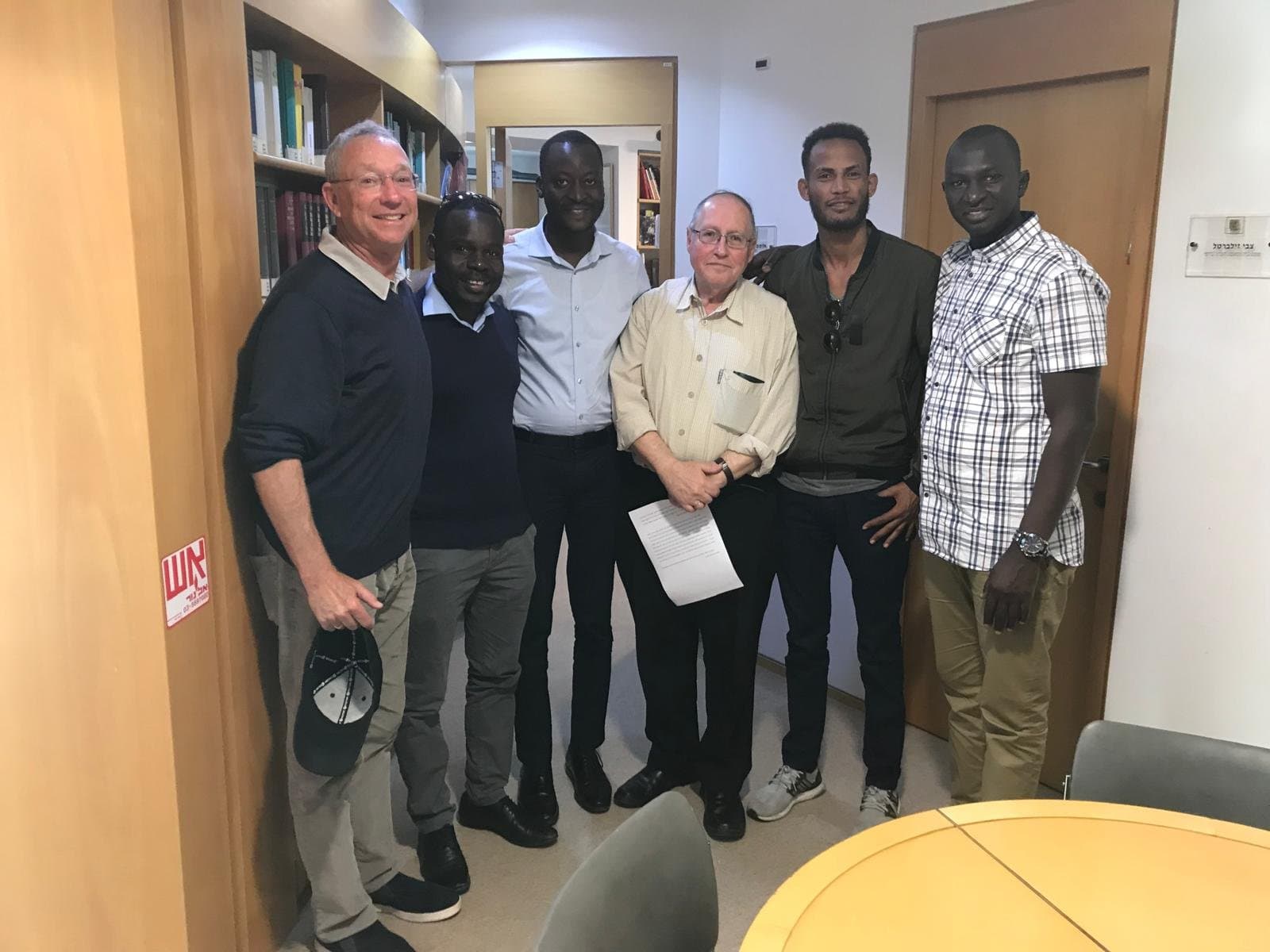
Eight students
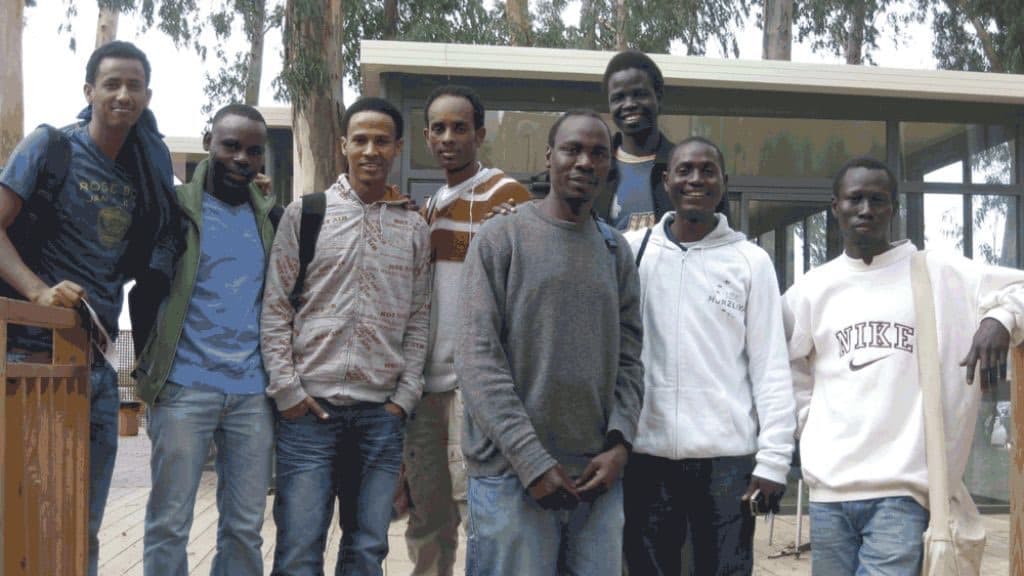
In 2010, Joey met eight African asylum seekers who wanted to study. Eight people at one meeting. Through them, a door opened for an entire community.
By the middle of that decade, a whole generation of us was standing at the university gate. We had survived genocide, prisons, and the desert. We were in the country without parents to call. We washed dishes, cleaned stairwells, and guarded construction sites through the night, saving wages that were never going to add up to a semester.
The Low family answered the way they always answer, which is fully and without a press release. They extended the mission that began with Ethiopian-Israeli education to African refugees. They helped establish the African Students Organization and have been its sole funders for a decade: tuition, living costs, mentoring for high school students. More than one hundred African refugees now hold first and second degrees from Israel’s best universities, alongside the hundreds of Ethiopian-Israeli graduates.
What deserves the most recognition is not the generosity. It is what the Low family never cared about. They never cared about our skin color, and they never cared that not one of us is Jewish. We are Black, African, and most of us Muslim.
What mattered to them was a set of things they had decided to live by: plain humanity, at a time when it has become scarce. The Jewish memory of persecution, which they chose to honor rather than guard. Never Again as an instruction, not a slogan. And the commandment the Torah returns to again and again: to love the stranger, “for you were strangers in the land of Egypt.”
Joey likes to quote Rabbi Abraham Joshua Heschel:
“In a free society, some are guilty, but all are responsible.”
We watched this family live that sentence for years before we ever heard them say it.
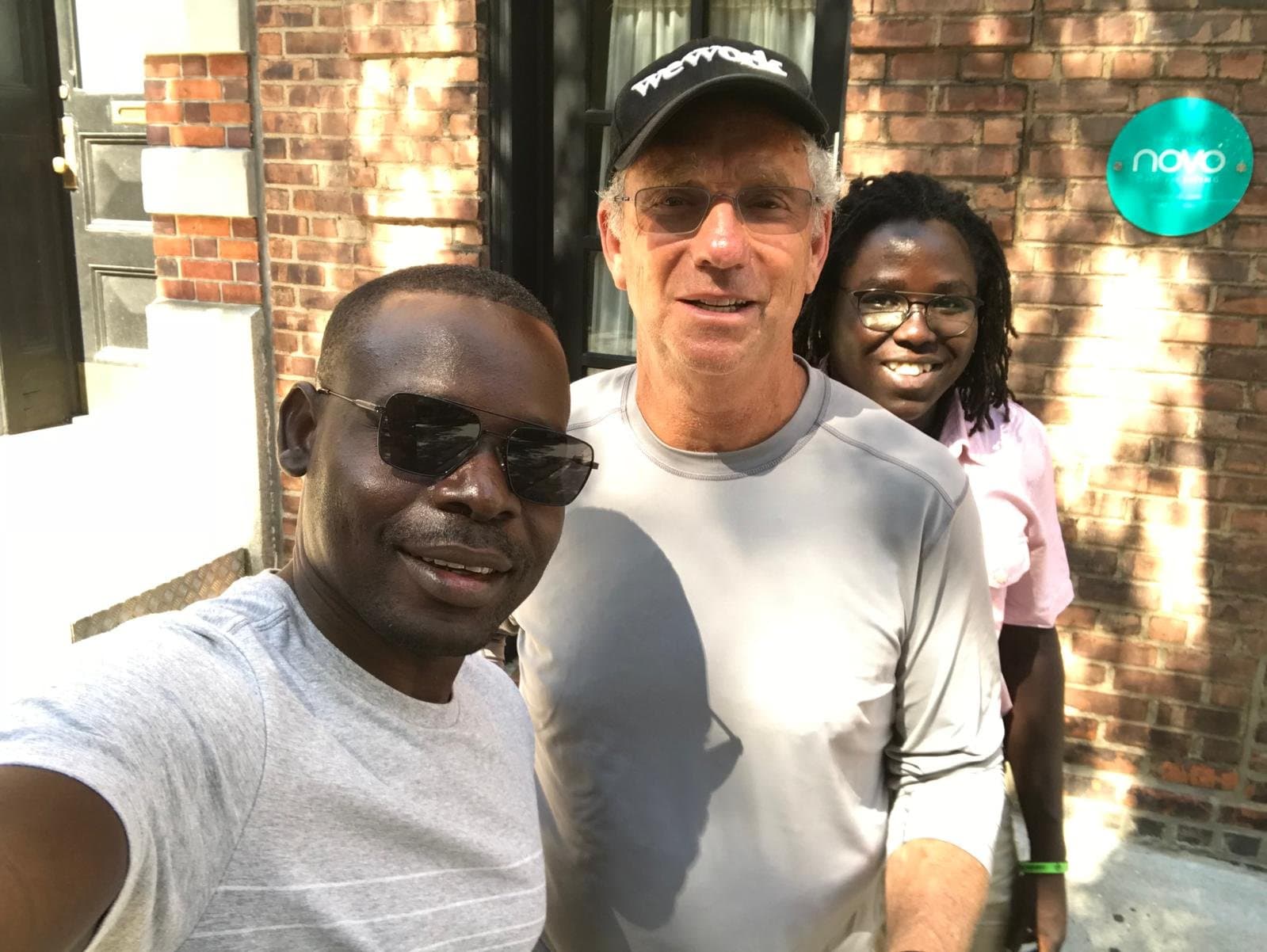
What one degree is worth
The numbers are easy to write down and hard to feel. So sit for a second with what a single degree does in our world.
Nearly all of these graduates, Ethiopian-Israeli and African refugees alike, are the first in their family to enter a university. For some of us it is the first academic degree in the history of an entire village.
A graduation photograph does not stay in one album in our community. It travels. To parents in refugee camps in Chad, to brothers and sisters scattered over three continents, to villages that are no longer standing. Everywhere it lands, it says the same two things: we were not erased, and something else is possible for the children.
Each graduate resets the ceiling for a family, so that the next generation will find university unremarkable. Each becomes someone to point at on streets where the people worth pointing at were taken away. And each one gives back.
Mutasim
Mutasim Ali has been displaced from Darfur since 2003. In 2015, from inside a detention facility, he applied to law school, which may be the purest act of hope either of us has witnessed. In June 2016, he became the first Sudanese national ever granted refugee status in Israel.
He finished his law degree at the College of Law and Business in Ramat Gan, went on to a master’s in law at George Washington University, then obtained his doctorate at American University Washington College of Law. Today he works as legal counsel at the Raoul Wallenberg Centre for Human Rights, building cases for victims of atrocity and pushing states and institutions to act on genocide prevention. Much of that work is now aimed back at Sudan, at the people he grew up among.
The boy the world would not protect grew into a man who writes protection into law.
Monim
Monim Haroon was driven out of his home as a child, when the Sudanese armed forces and the Janjaweed came to his village. Years later, as an activist against the Islamist regime, he was warned that his name had reached a wanted list. He crossed the Sinai on foot and entered Israel at the end of 2012.
By 2021, he held a bachelor’s degree in business administration and political science and a master’s in public policy from the Hebrew University of Jerusalem. He led the Advocacy and Partnerships Department at HIAS Israel, the international Jewish humanitarian organization, and represented refugee issues at the Knesset.
When war broke out in Sudan again in April 2023, HIAS sent him to Chad as its emergency communications manager. He spent those months at the edge of his own country, in camps holding hundreds of thousands of the newly displaced, sitting with survivors and carrying what they said out to the world.
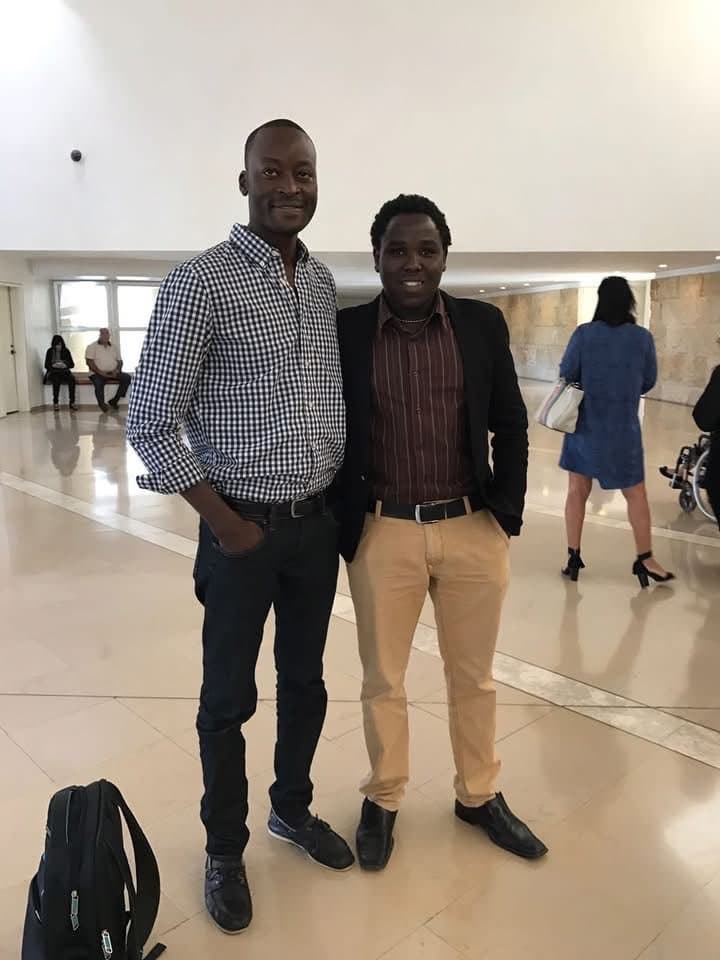
Then came October 7. He was appointed to lead advocacy and partnerships for HIAS’s emergency response inside Israel, which worked with more than twenty Israeli organizations and reached over 250,000 people affected by the war. The refugee who had been taken in was now one of the people doing the taking in. In his own capacity, outside any job, he is still working on efforts to end the war in Sudan.
The arithmetic
Read those two stories next to the numbers, and something becomes visible.
When the Low family stood behind us, they were not standing behind two students. They were standing behind everyone those two students would ever reach. Every survivor heard, every case argued, every family sheltered since carries some fraction of their kindness inside it. And what is true of the two of us is true of hundreds of graduates.
This is the strange mathematics of investing in a person: it never stays in the person. It moves through them and multiplies past anyone’s ability to count it. That is the real return on this family’s giving, and the part they will never get to see. It no longer lives in us. It lives in thousands of people who will never hear the name Low.
Being seen
They did not only pay for our education. They trusted us to speak, which is a rarer gift.
In the summer of 2018, Monim got a message from Joey with an invitation in it that read like something out of a dream: come to America, speak for Sudan, tell your story. That trip took a group of students to meetings with officials in Washington, and to the United States Holocaust Memorial Museum, which had declared a genocide emergency in Darfur as early as 2004.
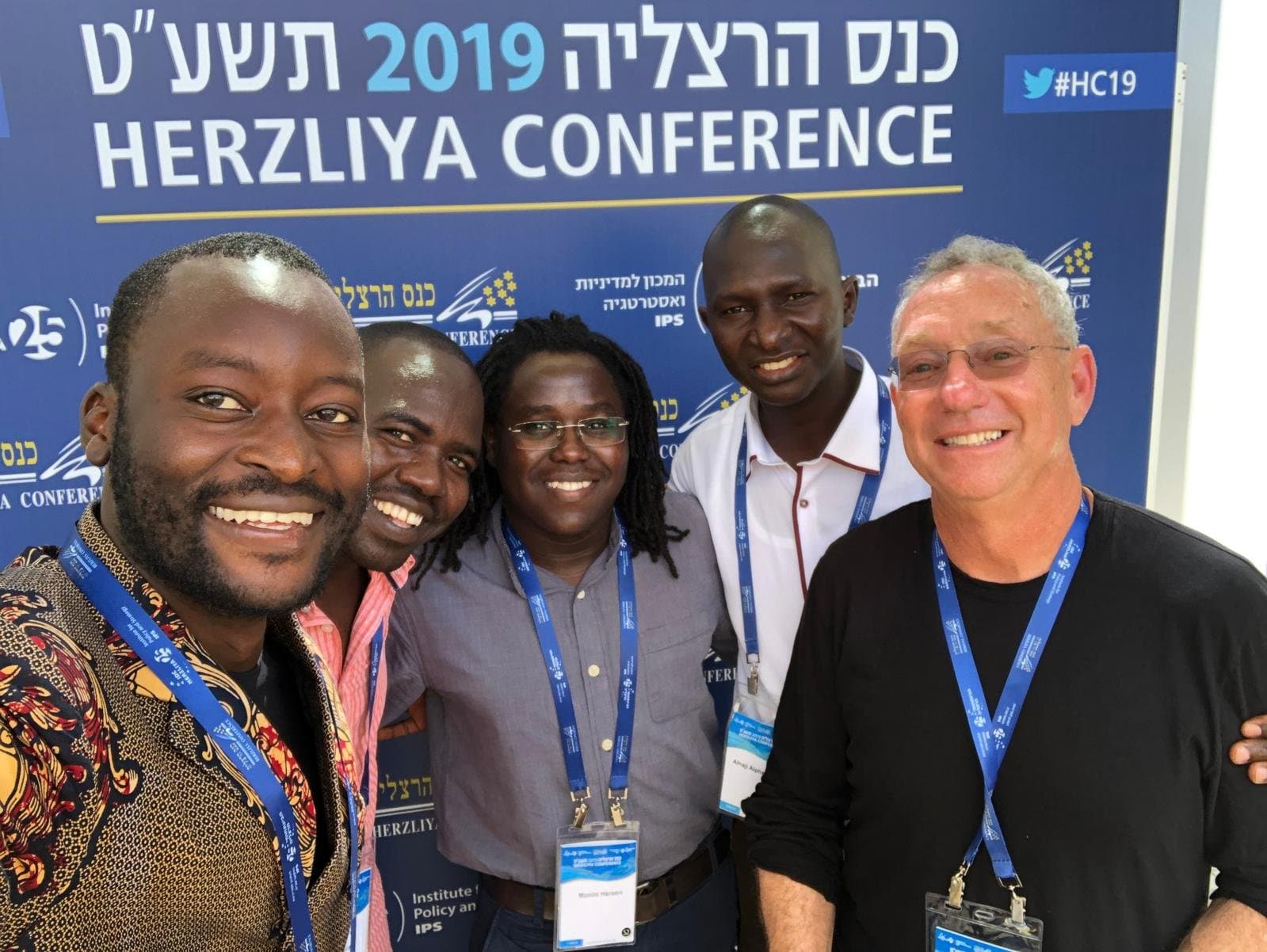
We walked through the memory of the Holocaust and learned properly, for the first time, what the Jewish people had endured. And then, in that same building, we found our own catastrophe documented and named.
It is hard to explain what that room does to a survivor whose dead are still being denied. Denial is the last stage of genocide. Recognition is the first stage of healing. In Washington, in a Jewish museum, our dead had been counted. We understood then that the Jewish voices raised for Darfur from the very first days had been speaking from somewhere much deeper than politics.
At the Congressional Black Caucus conference, we met Black American students who had no idea that Black refugees were building lives in Israel, who had never heard of the Ethiopian Jews or the Black Hebrews. We watched a story the world does not tell get told, and get heard.
And at the end of that week came the morning in Central Synagogue.
In the winter, the values were tested
In December 2017, the Israeli government announced a plan to deport African refugees to a third country in Africa.
In our neighborhoods, people started receiving notices. Parents asked us whether Rwanda would be safe for their children. Friends lay awake at night doing the arithmetic of despair.
Israel at Heart was founded to advocate for Israel. Opposing the government of Israel was not on the list of things it was built to do. The family and the organization threw themselves against the deportation anyway, on the understanding that advocacy for Israel starts with Israel keeping faith with its own values, and that receiving refugees decently is in Israel’s own deepest interest.
Joey pressed Jewish leaders in America. He delivered letters of protest to the Rwandan embassy. He said publicly that this thing could not be done in the name of Jews and of Israel. The family backed the students’ campaigns and stood with the wide Israeli public that rose up against the plan, until it collapsed in April 2018 and tens of thousands of refugees were saved.
Our community slept again.
The values came first, even when honoring them meant standing in front of the government of the state they love most and have spent their lives defending.
The knock at the door
When COVID shut the restaurants, hotels, and businesses where our community earns its living, our people were left with no unemployment insurance and no safety net at all.
Before any institution reached us, there was a knock at the door. The Low family got there first, with food packages handed over in a way that left everyone’s dignity intact. That is the detail people still mention, years after the hunger passed. Not the food. The way it was given.
What is Israel at Heart?
During that week in New York, one of the students in our delegation told a reporter something the rest of us had been thinking for years: “Joey is like family to us.”
That is probably the truest sentence in this piece.
The official answer is that Israel at Heart is an organization founded in 2002 to tell Israel’s story to the world. Those of us who have lived inside its work know a better one. Behind Israel at Heart are souls. Joey Low and his family, people who decided that Jewish values are not verses to be read but a way to conduct a life, and who then applied them to strangers who share neither their religion, nor their color, nor their citizenship.
“When a stranger resides with you in your land, you shall not wrong him; you shall love him as yourself, for you were strangers in the land of Egypt.”
We were those strangers. We were not wronged. We were loved.
Why we wrote this
Three reasons.
Recognition, first. What Joey Low, his family, and Israel at Heart have built deserves to be written down, not because they ever asked for it, but because the record should include the people who chose to do good at a moment when nothing obliged them to.
Inspiration, second. The world is tired and suspicious and spends most of its energy arguing about walls and strangers. This story is evidence that another way is available, and that it works. One family, holding on to ancient values and keeping an open heart, changed the future of entire communities. Imagine what would follow if this case were widely known, told, and copied.
And gratitude, which words can start but never finish.
Thank you, Joey. Thank you, Israel at Heart. From the two of us, from hundreds of graduates, from the families sleeping safely tonight, and from villages that will one day hear what a family in New York did for their children: what you planted in strangers has grown into a forest.
We intend to spend our lives passing your kindness on. We are fairly sure that is the only thank-you you ever wanted.