Sports Diplomacy
From Gondar to gold: Israel at Heart and the runners who bring Hatikvah to the world
Haimro Alame has twice stood for Hatikvah as a European team champion and has finished fourth in the world. Gezachew Fanta holds the Israeli record at 100 kilometers. Both came to Israel from the Gondar region of Ethiopia, and both describe what they found in Joey Low and Israel at Heart in the same terms: not help, but the kind of backing a father gives, before the result and without conditions.
By Monim Haroon
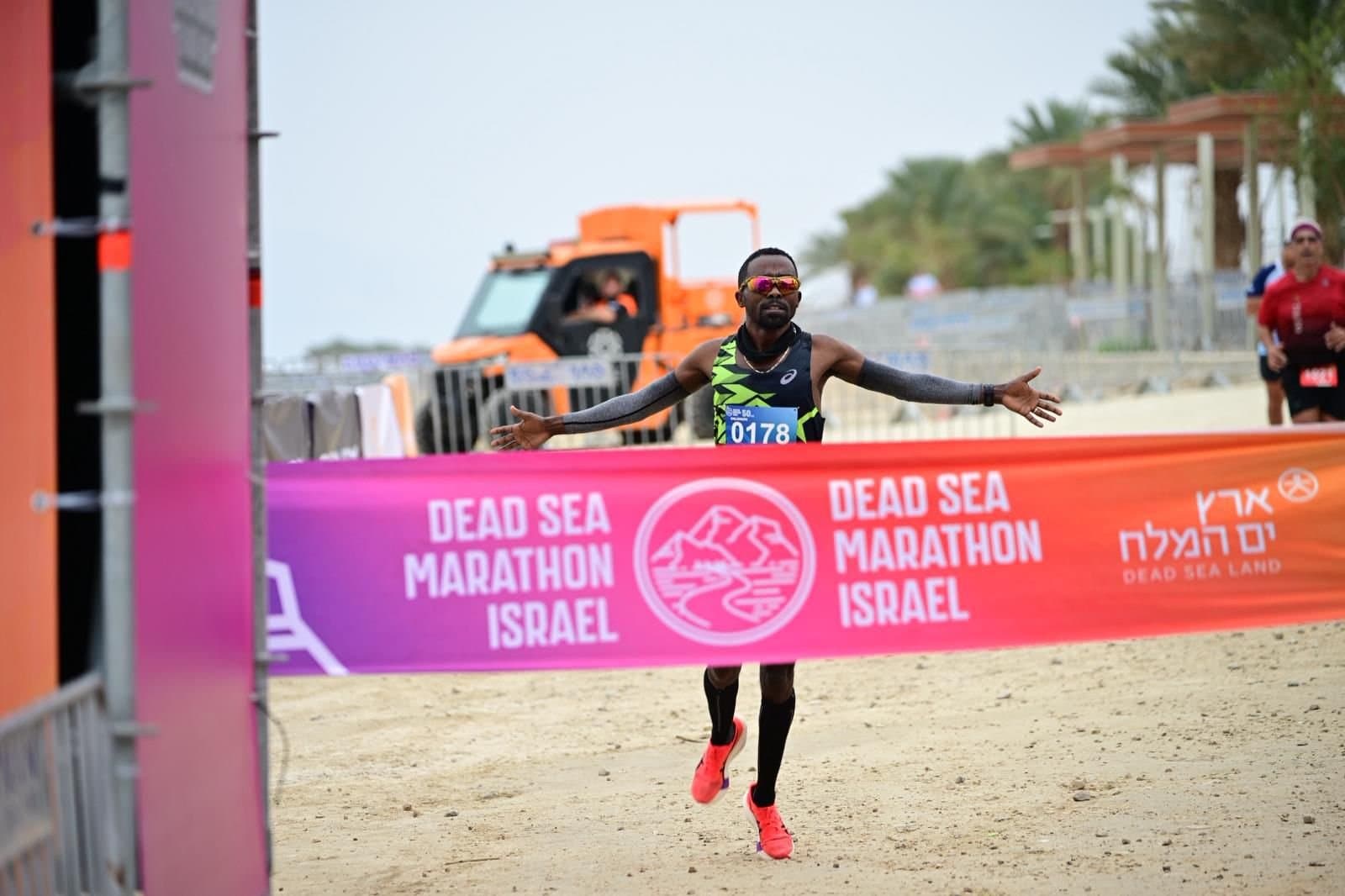
On the last day of August 2026, a group of runners finished a long training run and did what they do at the end of every session, three times a week: they sat down in a circle and talked. Two of the men in that circle were not amateurs. Two weeks earlier, Haimro Alame had run for the Israeli team that won the men's marathon gold at the European Athletics Championships in Birmingham. Gezachew Fanta, who helps organize the group, is the Israeli record holder at 100 kilometers.
Not a spokesperson for Israel, but a person whose life is the argument.
Their results are a matter of public record. What follows is the part that is not: how a chance meeting on the Tel Aviv promenade with the founder of Israel at Heart changed the terms on which two Ethiopian-Israeli champions run, and what they have done with that backing since.
Haimro Alame
Haimro Alame was born in 1990 in the Gondar region of Ethiopia and came to Israel with his family in 2004, at fourteen. On the track he became Israeli champion at 1,500, 5,000 and 10,000 meters, set a national record at 10,000 meters, and won bronze over 5,000 meters at the 2015 European Games in Baku. He then moved up to the marathon, ran for Israel at the Tokyo Olympics, and in Valencia in December 2023 recorded 2:06:04, one of the fastest marathons ever run by an Israeli.
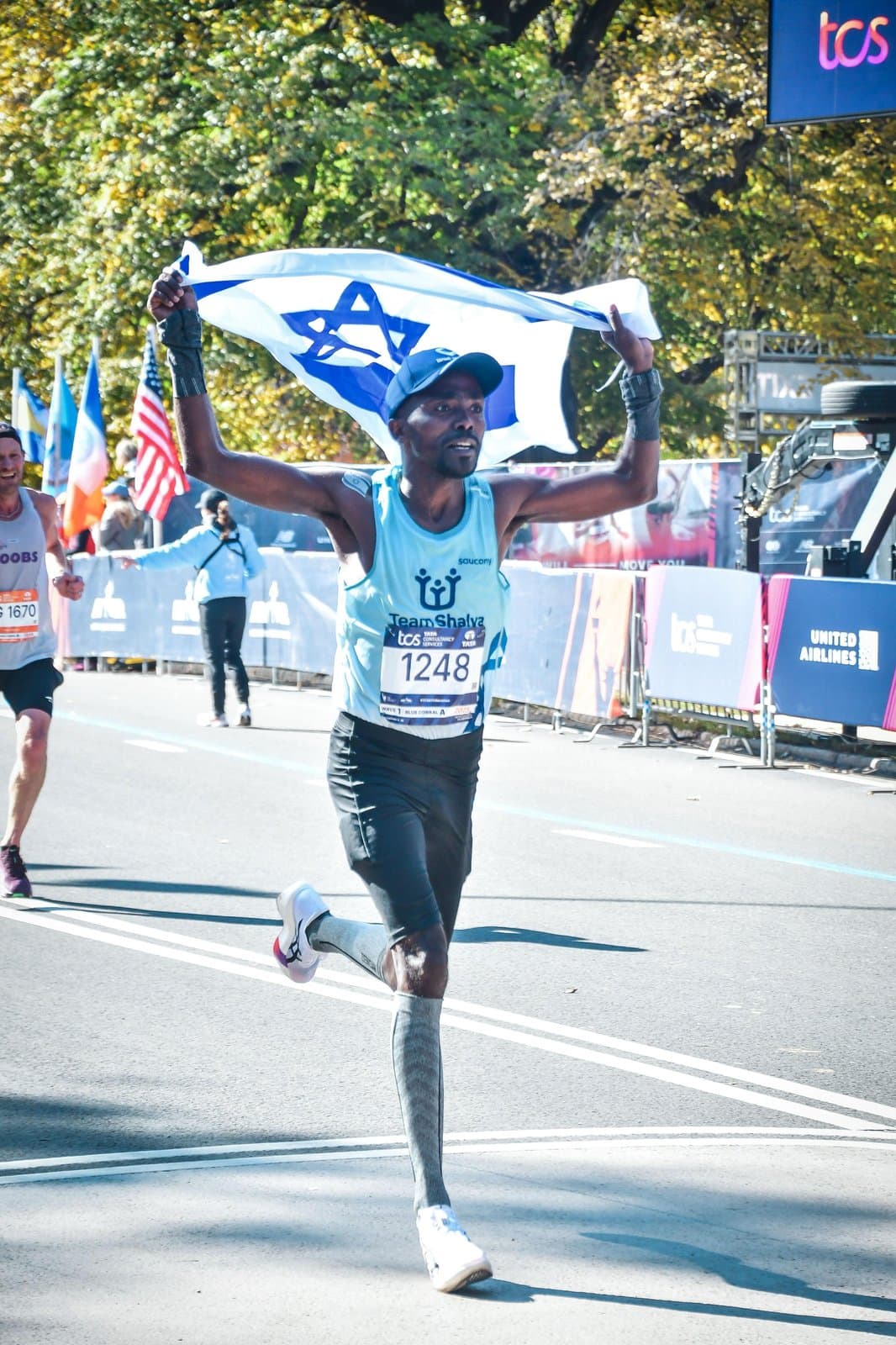
The years since have been the strongest of his career. In January 2025 he won the Chevron Houston Marathon in 2:08:17 and celebrated with the Israeli flag and Hatikvah. In April 2025 he finished fourth in the marathon at the European Running Championships in Belgium, and his placing helped carry Israel to the team gold. In September 2025, in the heat and humidity of Tokyo, he finished fourth at the World Championships in 2:10:03, ten seconds from a medal. In August 2026, in Birmingham, he ran eighth as Israel beat Germany by 26 seconds for the team title, his second European team gold in sixteen months. He is thirty-six, married, and the father of three.
Gezachew Fanta
Gezachew Fanta was born in 1987 in a village in the Gondar region, close to the Sudanese border, where he herded sheep as a boy. He arrived in Israel in 2006 with his parents and eight brothers and sisters, unable to read or write. He served in a reconnaissance unit of the Golani Brigade, studied at the Academic College at Wingate on a scholarship for combat veterans, and became one of Israel's most durable distance runners, with some forty marathons behind him in Boston, Berlin, New York, Tokyo, Jerusalem and Tel Aviv.

In 2019 he won the Israeli 50-kilometer championship at the Dead Sea. In January 2025, on a flat course in Tel Aviv, he entered a 100 kilometer race a week before the start, led from the first kilometer, and finished in 7:33:51, nearly half an hour inside the previous national record. He ran it in a shirt that read “Avera is still alive,” for Avera Mengistu, the Ethiopian-Israeli who had by then been held in Gaza for more than ten years. Six weeks later, Mengistu came home. Fanta is thirty-nine, married, and the father of three. He holds a full-time job. Running is what he builds around it.
A meeting on the promenade
Israel at Heart was founded in 2002 on a conviction its founder has repeated for more than two decades: that the most powerful way to change how the world sees Israel is not to send a spokesperson but to send a person. From its first delegations, every group the organization sent abroad included an Israeli of Ethiopian origin. In 2006 it added a fellowship for Ethiopian-Israeli students at what is now Reichman University, from which more than 220 have since graduated. Sport has been one of its languages from the beginning, from the basketball delegations it sent to American campuses to the refugee soccer teams it equips in Israel. Running through all of it is a habit: noticing people and asking what they need.
That habit is how two runners met Joey Low. An Eritrean friend of theirs, then living in Israel as a refugee, was walking with them along the Tel Aviv beachfront after a training run when a man stopped to greet him. Introductions followed. The man asked who they were and what they did. They said they were runners. Then he asked a question neither of them was used to hearing: did they have any support?
“He took an interest in us. He asked who we were, what we do in life. We told him we are runners. And then he asked whether we had any support. And he started supporting us, and he has supported us ever since.”
Fanta had never heard of Israel at Heart. He has since seen how far its work reaches, into fields that have nothing to do with running, and it has only deepened his regard for the organization behind the man on the promenade.
Not help
Asked to describe the help he receives, Haimro objected to the word.
“My relationship with Joey is not just help. It is deeper. It is as if he gave his son what he needed to prosper. That is how I can define my closeness with him: like father and son.”
What that relationship provides, in his account, is quiet, and with it focus and determination. A marathoner at his level spends long stretches of the year away from home, at altitude camps in Ethiopia and at races on other continents, and the distance from his family used to wear on him more than the training did.
“He gave me the peace of mind, mentally and financially, to keep running and to focus only on that,” Haimro said. “Since I met him, I have been at my peak. He took care of my family. He even made sure my family could be close to me at training and at competitions, something many people never get.” The instruction that came with the support was short and motivating: “You focus on your running, and your family will be fine.”
Haimro measures the difference in a runner's units. “I used to give a hundred percent. The moment Joey Low came along, it turned into two hundred percent.” At thirty-six, he says, the peak of his career is only beginning.
The results since that meeting on the promenade are the ones set out above: the win in Houston, two European team golds, fourth place in the world. When asked whether Israel at Heart has a share in them, he did not hesitate. “Since I met Joey, many great things have come my way, toward success, and soaring upward. Whether it is winning twice at the European Championships and hearing the anthem played, or setting personal records and reaching fourth place in the world, all of it was possible because of Israel at Heart and Joey Low.”
Before the results
In the middle of the conversation, Haimro drew a distinction that explains what sets this backing apart from every other kind he knows.
In his sport, the state rewards for results, and only for results. “If you don't have results, you don't have financial support,” he said. “The moment you stop producing results, the state cuts its rewards accordingly.” Israel at Heart works the other way around. “Joey doesn't come and say: now you have a result, so I'll help you. He comes and says: what do you want to achieve? Come, I'll help you reach the goal. Not after you've achieved it.”
“Support that arrives after the result rewards success. Support that arrives before the result creates it.”
Almost everything institutions do belongs to the first kind. Almost everything Israel at Heart does belongs to the second, and it did so for a generation of Ethiopian-Israeli students and African refugees long before it met two runners on the promenade.
The difference does not stay with the athlete. In a community still laying its foundations in Israel, one champion is never only one champion. He is the example an entire community can see, and the proof for the next fourteen-year-old from Gondar that the distance from a village in Ethiopia to a world championship start line can be run. When Haimro Alame crosses a finish line in blue and white, in Houston or Tokyo or Birmingham, he is what Israel at Heart has believed in since 2002: not a spokesperson for Israel, but a person whose life is the argument.
Eighteen days far from home
Fanta's account is quieter, and it is about room: the room to be an athlete inside a full working life.
Before Israel at Heart, a race was something he fitted between working days, with no rest on either side. Now he can take the day before and the day after, which is ordinary for a professional and was out of reach for him. “If it weren't for Israel at Heart's support, I wouldn't be doing any of it, including setting records and winning races,” he said. “Reality itself would not have allowed me.”
In November 2025, Israel at Heart made it possible for him to run the New York City Marathon, where he met people he had never imagined meeting. Four months later he was in Japan for the Tokyo Marathon when the war with Iran began and the way home closed. For more than two weeks he was far from his family, in a situation no travel plan anticipates. “Through all of those trying days,” he said, “Joey's hands were there with me, supporting me and helping me make it home.” And they stayed there until he was home.
How he got home is his own story, and in the end a detail. What stayed with him was the nature of the help: one person who could be reached, who took the matter as his own, and who wrote the next morning to ask how he was doing and how he was coping. “In my whole life,” Fanta said, “I have never met a person so helpful, so supportive, so kind, and so full of humanity.”
“There is no other Joey.”
Passing it on
There is a sentence of Joey Low's that both runners keep returning to.
“Always remember that you need to know how to break through your own limits along the way. Don't wait for someone to break through for you. I am here to help, and so it shall be. I believe in you, and you will do it.”
They have taken it in two directions: through their own limits, into records and medals, and outward, into the time they now give to others. Three days a week, Fanta helps organize a training group that continues the work of a coach who died a year ago. It has no club, no federation and no budget. What it has is determined runners with big dreams, a meeting point, a long run, and a circle at the end that serves as a support group. He does it, he said, to give a little inspiration, a little drive and a little motivation to people who would otherwise train alone or leave the sport.
Fresh from Birmingham, gold medal in hand, Haimro joined Fanta for a day with Save a Child's Heart, the Israeli organization that brings children from across the developing world to Israel for life-saving heart surgery: two champions giving their time to small patients who had traveled a long way for a second chance at life. When the organization reached out, Haimro said, he immediately said yes.
His explanation of why he went is the clearest statement in this story of what Israel at Heart's support has produced. “Having Joey's inspiration in mind helped me to understand how important it is to give back and help others,” he said. “I could not reject any opportunity to give back to those in need.”
What it adds up to
Two boys from the Gondar region, one who arrived in Israel at fourteen and one who arrived unable to read or write, became Israeli champions. Then, in the years that matter most in a runner's life, they met an organization that asked what they wanted to achieve and stood behind them before anyone was paying for results. One has since finished fourth in the world and twice stood for Hatikvah as a European team champion. The other holds a national record and made it home from a war. Both now carry Israel's story in two directions at once: outward, to the start lines of Houston, Tokyo and Birmingham, and inward, to a circle of runners who meet three times a week and a ward full of children in Holon.
The anthem they carry to the world is named for hope. Support given before the result is what hope looks like in practice: a bet placed on a person while the outcome is still open. Israel at Heart placed that bet on two runners from Gondar, as it had on a generation of students before them, and the outcome is now a matter of public record.
Fanta's wish, at the end of the conversation, was arithmetic. “I wish there were many more people like Joey, especially here in the State of Israel, where there are many different communities,” he said. “I wish there were a million people like Joey.”
A million is a lot to ask. Everything in this story began with one man who stopped on a promenade and asked two strangers whether they had any support. One more would already change someone's life.